
One theme that keeps coming up in our class discussions about Lyon is intentionality in the city’s various forms of art, and food is no exception. Lyon’s identity as the capital of gastronomy was certainly one of the many reasons I was drawn to the city. But I didn’t realize exactly what this title entailed until I got here.
Lyon regards food with respect. This is most evident in their custom of setting aside at least an hour from work for lunch (and often closing the shop, much to the chagrin of us American customers). Ample time is given to eat, talk, and rejuvenate. This purpose of meals as providing respite in addition to sustenance greatly contrasts to the ubiquitous American employees who distractedly eat lunch at their desks as they scramble to meet deadlines.
Food’s high priority even pervades the city’s political infrastructure. I was both surprised and delighted to find out that a whole baguette cost one euro, thanks to the government subsidizing bread. Food is a fundamental human need, and Lyon recognizes this. I recall my nutrition professor lamenting how she struggled to convince policy makers why access to food should be considered a basic human right. The thought of having to argue this seems incredulous to me, yet here we are. So I deeply appreciate that both Lyon’s government and people are in consensus about this issue, and actively work to meet it.
You may notice some mouth-watering pictures below. On Thursday we went on a group dinner to Paul Bocuse’s Le Sud, much to my delight. As I ate each dish, I took notes on the ingredients, potential cooking techniques, and plating methods. I’ve never done this before, but the food was just so spectacular that I had to! For those who were not with us for dinner, we mourn your loss, but please enjoy my sensory description of this 3 course meal.
Sincerely,
Karis
Course 1: Confit Vegetables
The plate is painted with a salty, fresh pesto. The confit vegetables consist of eggplant, onions, roasted red bell peppers, yellow and green bell peppers, garlic, parsley, and basil. Confit is a slow cooking method, so most of the vegetables were quite soft, but there was a slight crunch in the green bell pepper, which was chopped more coarsely. The vegetables were plated in a ring mold, which both built height for the dish and paired geometrically with the round plate. On top was the Ibérian mini sardines from Galice, which had a firmer texture and nice saltiness. The white curly vegetable you see is called frisée, and is crunchy and bitter. There is a lot of contrast: soft with the crunchy, salty with the bitter, subtle colors with the bold. I found this dish to be the most interesting and balanced of the three. 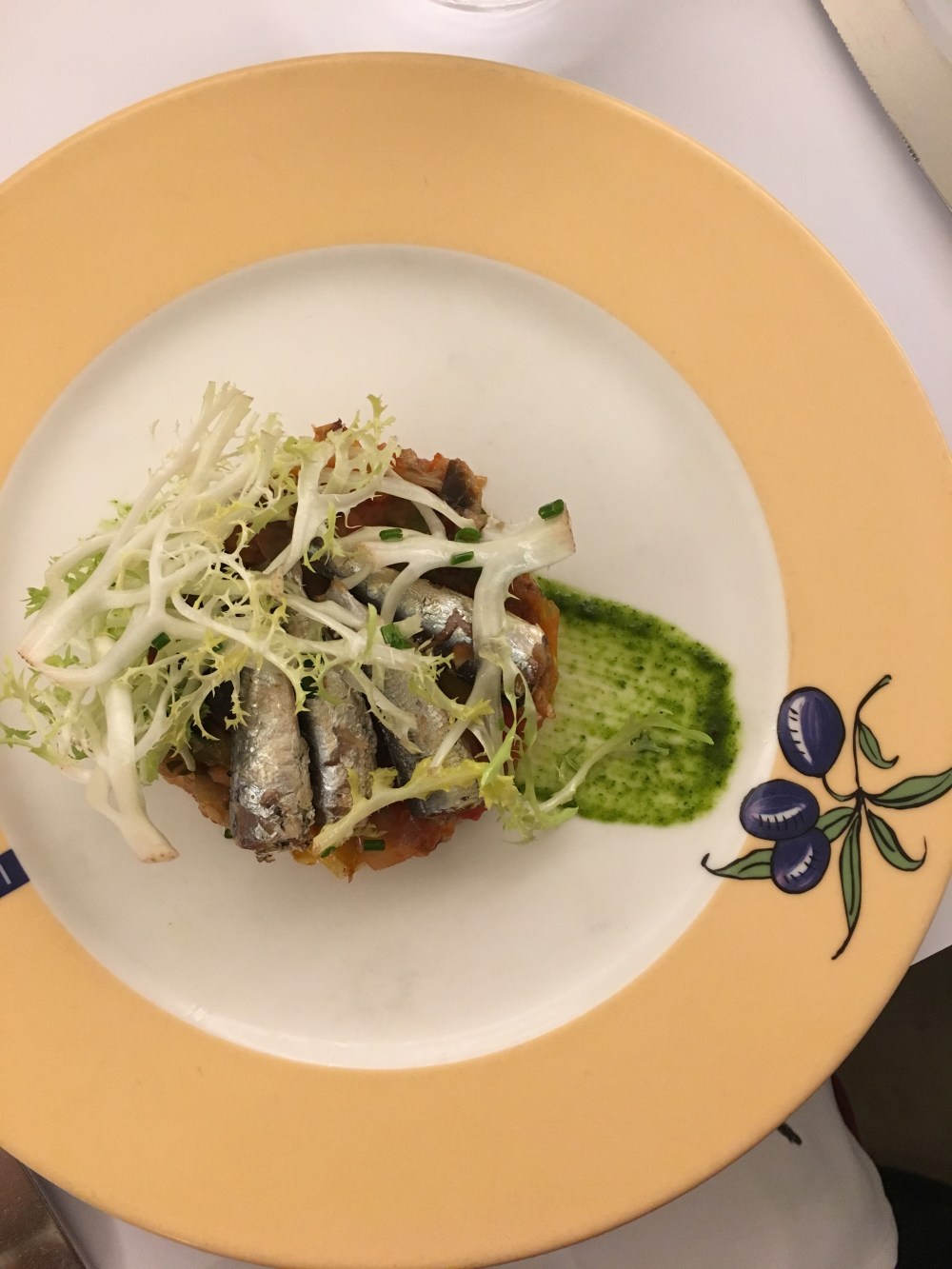
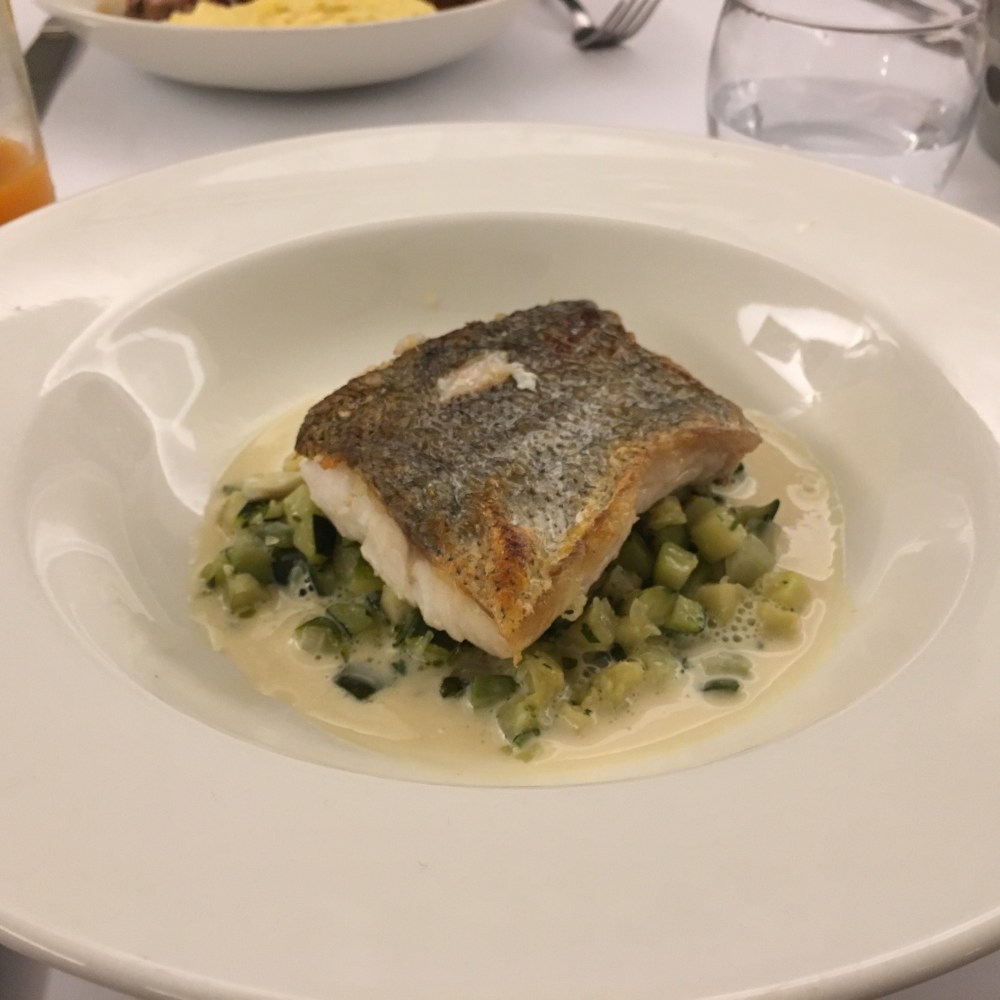
Course 2: Filet of Hake Cooked in Olive Oil
The menu said the dish came with a lemon sauce, but quite frankly I didn’t taste it. Nevertheless, it was delicious. The zucchini was diced and simply seasoned, and the cream sauce was thin and flecked with bits of parsley (I also suspect they mixed fish stock into the sauce). The filet was cooked skin-side down, resulting in nice crisping from the Maillard Reaction and a succulent, flaky flesh. The elements were stacked nicely as to give the dish a good height. I just wish there was more acidity from the lemon to round it all out. Still great though!
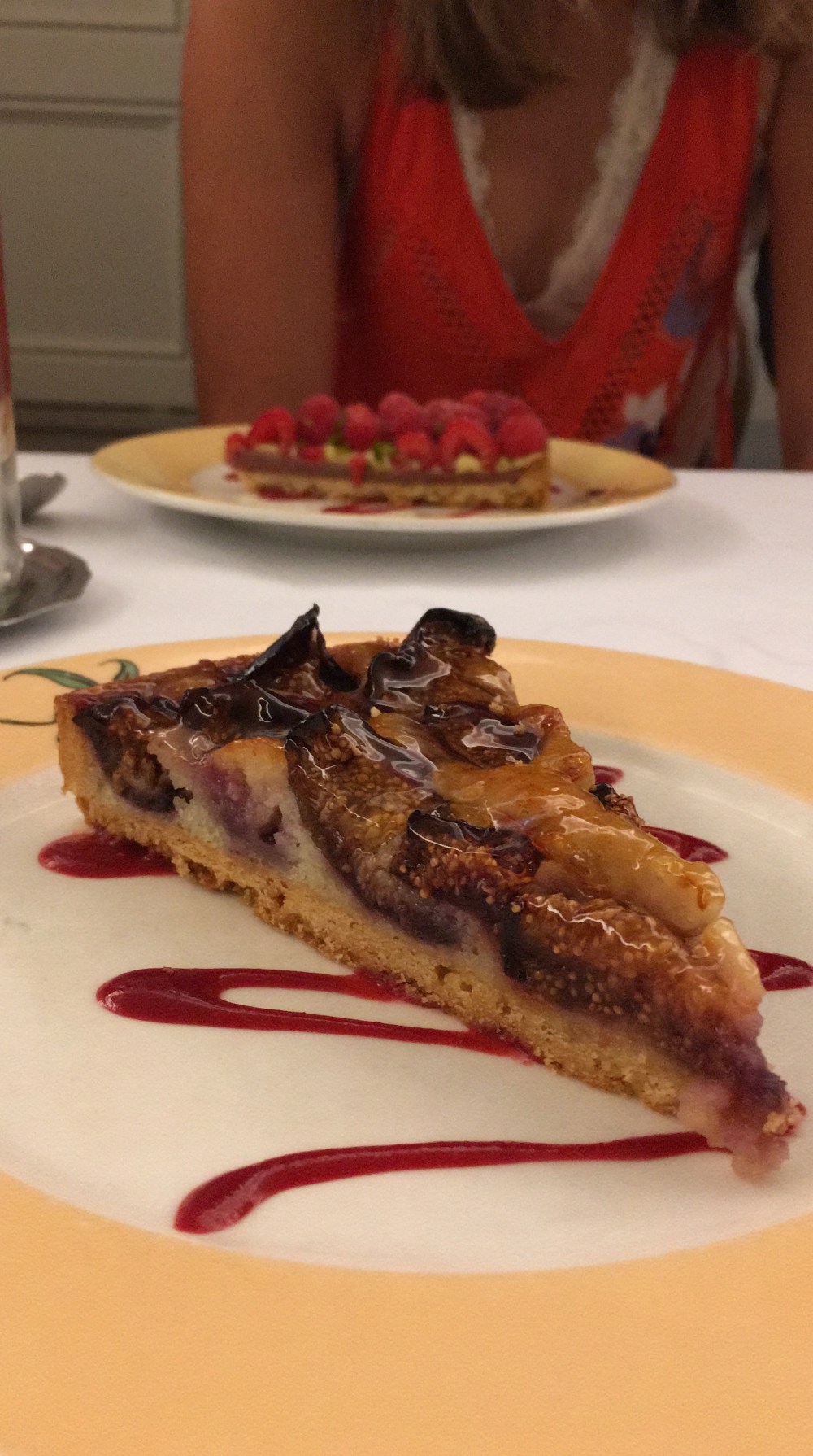
Course 3: Fig Tart with a Raspberry Coulis
Shortcrust pastry is a technical feat in itself, and this tart’s pastry was done well, as evidenced by the solid sound and feeling when I cut into it with my fork. The berry coulis added a nice acidity to the sweet tart filling, and the fig seeds gave it a nice crunch. Visually, there’s nice pops of red and purple, and the zig zag of the coulis was both aesthetic and provided a satisfying portion of coulis for each bite.
 CHID Lyon: Art and innovation 2019
Perhaps one of your many callings is food critic! Love you detailed analysis of each dish. I felt like I was reading “Cooks Illustrated.”
LikeLike